
Woolbert Dental in Shreveport designs and fits custom dentures — including complete dentures, partial dentures, and implant-retained overdentures — to restore chewing function, speech, and facial support after tooth loss. Dr. Michael Woolbert uses precise impressions and custom shade matching so your dentures look natural and fit comfortably from day one. Patients from Shreveport trust Woolbert Dental for dentures that feel stable and look like their own teeth. Schedule a denture consultation or call 318-868-8276.

What are dentures?
Dentures are dental prostheses designed to replace natural teeth that have been lost or removed. These artificial teeth and gums are custom-made by your dentist to fit your mouth and restore your ability to eat, speak, and smile with confidence. Depending on your needs, dentures can be full or partial, replacing either all teeth on the top or bottom gum line or just a few missing ones. Your dentures will be tailored to fit your unique mouth shape and color-matched to blend seamlessly with your existing teeth, ensuring a natural-looking and comfortable fit.
What are the different types of dentures?
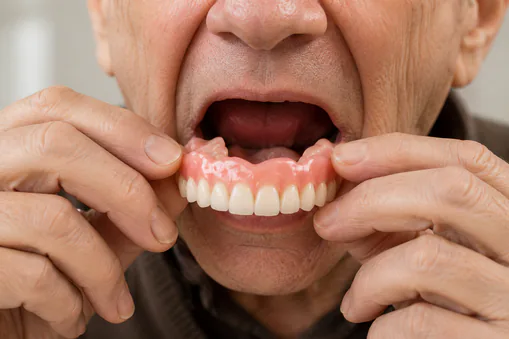
Complete Dentures
Complete dentures are removable dental appliances designed to replace all of the natural teeth in either the upper or lower jaw, or both. They consist of a gum-colored acrylic base that supports a full set of artificial teeth, which are custom-made to fit your mouth and closely mimic the appearance of natural teeth.
Modern dentures have come a long way. Current materials, precise impressions, and digital shade matching deliver results that look far more natural than the dentures of 20 years ago. At Woolbert Dental, every patient is walked through all available options — including implant-retained overdentures, which dramatically improve stability.
The biggest complaint about traditional dentures is slippage. Implant-retained dentures are often recommended when the budget allows — even two implants per arch can anchor a lower denture and eliminate that concern completely.
Reviewed by Dr. Michael Woolbert · Woolbert Dental, Shreveport, LA
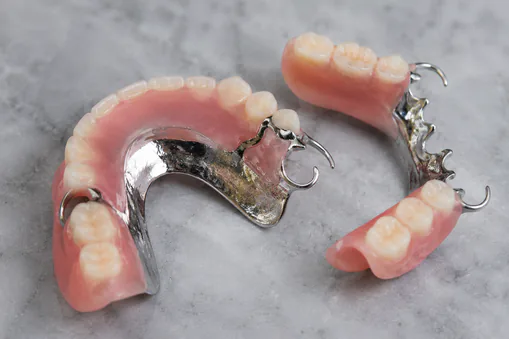
Partial Dentures
Partial dentures are dental prostheses designed to replace one or several missing teeth. Unlike complete dentures, partial dentures attach to the remaining natural teeth with metal clasps or precision attachments, providing a secure and stable fit.
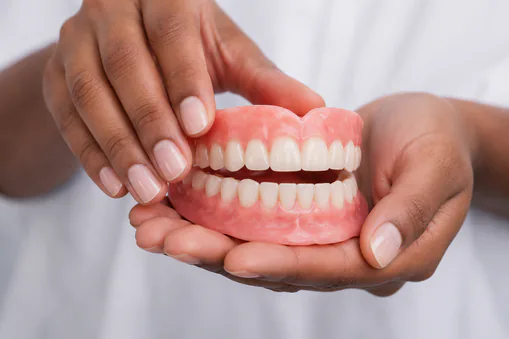
Immediate Dentures
Immediate dentures are a type of denture that are placed immediately after tooth extraction, providing patients with a complete set of teeth during the healing process. They are custom-made to fit your mouth and closely mimic the appearance of your natural teeth.
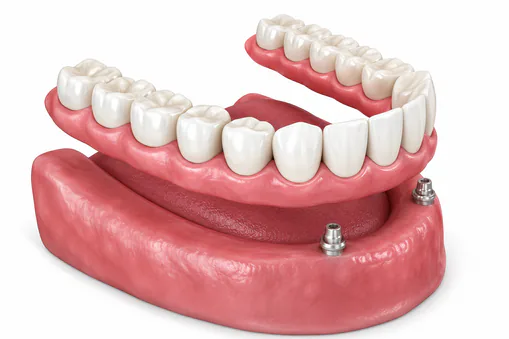
Overdentures
Overdentures are a type of denture that fit over existing teeth or dental implants, providing a more stable and secure fit. They are designed to snap or clip onto abutments that are attached to the natural teeth or dental implants, which helps hold the denture in place and prevents it from slipping or moving around in the mouth.
Overdentures are typically recommended for patients who have some remaining natural teeth or dental implants that can provide support for the denture.
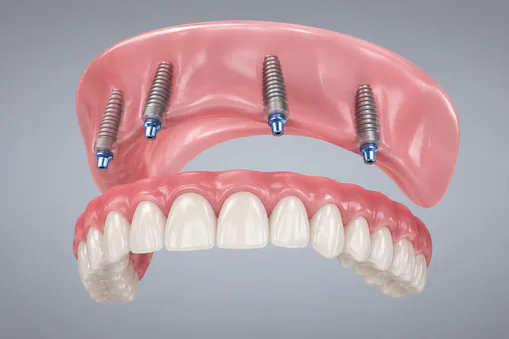
Implant-Supported Dentures
Implant-supported dentures are a type of denture that attach to dental implants that have been surgically placed in the jawbone. They are designed to provide a more stable and secure fit than traditional dentures, which rely on suction or adhesives to stay in place.
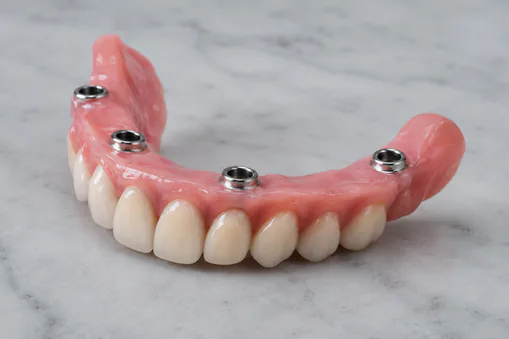
Snap-In Dentures
Snap-in dentures, also known as implant-retained dentures or overdentures, are a type of denture that attach to dental implants using locator attachments or snaps. They offer a secure fit that is less likely to slip or shift when eating or speaking compared to traditional dentures.
What Should I Expect When Being Fitted for Dentures?
In the event that you have damaged or decayed teeth that need to be extracted, our dentist will first perform the necessary extractions before taking a mold of your remaining gum structure and the roof of your mouth. This mold serves as a blueprint for the fabrication of your dentures, ensuring that they fit comfortably and securely.
Once the mold is taken, it will be sent to a dental laboratory where skilled technicians will create your customized dentures.
When the completed dentures are ready, you will return to our dental office in Shreveport for a final fitting. During this appointment, our dentist will check the fit and adjust the dentures if necessary to ensure that they are comfortable and secure. We will also provide instructions on how to properly care for your new dentures to ensure their longevity and performance.
It's important to keep in mind that adjusting to new dentures can take time and patience. You may experience some discomfort or soreness as your mouth adjusts to the dentures, but this is normal and should subside within a few weeks. As you become more accustomed to your dentures, you'll be able to enjoy the many benefits they offer, including improved chewing ability, clearer speech, and a restored sense of confidence. With proper care and maintenance, your dentures can provide you with a functional and natural-looking set of teeth for many years to come.
Is Dentures Right for You?
Dentures is a good fit if you are:
- Patients with multiple missing teeth (complete or partial dentures)
- Patients who aren't candidates for implants due to bone loss
- Patients looking for a non-surgical, affordable replacement option
- Patients interested in implant-retained dentures for better stability
This may not be the right option if:
- Patients with severe gag reflex (custom fit and design can help)
- Patients unwilling to remove and clean dentures daily
What to Expect During Your Dentures Visit
Here is exactly what happens at your appointment at Woolbert Dental. Knowing each step makes the experience far less intimidating — and lets you relax knowing what comes next.
- 1. Impressions and bite records. Dr. Michael Woolbert takes precise impressions of your gums and records your bite. You'll feel a soft impression material set in about a minute — not painful.
- 2. Try-in. A wax version of your dentures is tried in so you can see the shape, shade, and smile line. Changes are made before the final is fabricated — no surprises.
- 3. Final fit. The finished dentures are delivered and adjusted for comfort. You'll practice eating and speaking with them, and Dr. Michael Woolbert makes fine tweaks as needed.
- 4. Follow-up. A few days later, you return for sore-spot adjustments. Most patients fully adapt within 2–4 weeks.
Traditional vs Implant-Retained Dentures
Here is how Dentures compares to the main alternatives. Dr. Michael Woolbert reviews all options with every patient at Woolbert Dental so you make the best-informed decision for your situation.
| Feature | Traditional Dentures | Implant-Retained |
|---|---|---|
| Stability while eating | Moderate (uses adhesive) | Very high (snaps onto implants) |
| Bone preservation | No — bone continues to resorb | Yes — implants stimulate bone |
| Chewing strength | 20–30% of natural teeth | Up to 70% of natural teeth |
| Speech changes | Common early on | Minimal |
| Removable at night | Yes | Yes (snaps off for cleaning) |
| Upfront cost | Lower | Higher |
Common Concerns About Dentures
These are the questions patients at Woolbert Dental ask most often before committing to treatment. Dr. Michael Woolbert addresses each one honestly at your consultation.
"Dentures will look fake"
Modern dentures use high-quality acrylic and custom shade matching. Done by an experienced dentist, they look natural — and we refine the shape and shade at try-in before finalizing.
"Dentures will slip when I eat or talk"
Slippage is the biggest complaint about traditional dentures. If it's a major concern, implant-retained dentures (anchored to two or more implants) eliminate the problem entirely and dramatically improve chewing strength.
"Dentures are just for older patients"
Denture candidates span all ages — anyone with significant tooth loss due to decay, gum disease, trauma, or medical conditions may benefit. Age has nothing to do with it.
Risks and Considerations of Dentures
Every procedure has tradeoffs, and transparent conversation about them is part of informed consent. Dr. Michael Woolbert reviews these at your consultation and answers every question before treatment begins.
- Adjustment period can take weeks — sore spots are normal early on
- Long-term bone resorption leads to changes in fit
- Slippage or loose fit is common with traditional dentures
- Relines or replacements needed over time
Frequently Asked Questions About Custom Dentures
To care for your dentures, you should brush them daily with a soft-bristled brush and mild soap, rinse them thoroughly, and store them in water or denture solution when not in use.
It is generally recommended to remove dentures at night to give your gums and jawbone a chance to rest and to allow for proper cleaning and maintenance.
The lifespan of dentures can vary depending on the type, material, and frequency of use, but they typically last between 5-10 years.
The cost of dentures can vary depending on several factors, such as the type, materials, and the complexity of the fabrication process. At Woolbert Dental we will provide you with a cost estimate based on your individual needs.
Yes, dentures can often be repaired if they become damaged or broken. Your dentist can assess the damage and recommend the appropriate repair method.
It is common to experience some changes in speech patterns when adjusting to new dentures, but with practice, most people can speak normally.
If your dentures become loose, it may be time for an adjustment or replacement. Contact your dentist to schedule an appointment for an evaluation.
Yes. At our Shreveport dental office we offer dentures to patients that live in Shreveport and the surrounding area. Contact our office today to schedule an appointment.
Medical Disclaimer
This content is for informational purposes only and does not constitute dental or medical advice, diagnosis, or treatment. Denture adjustment can take weeks, and sore spots, slippage, or changes in speech are common early on. Long-term, denture wearers experience accelerated jawbone resorption compared to implant-supported alternatives. Consult Dr. Michael Woolbert or a qualified dental professional regarding any questions about your oral health. Individual results may vary.
Before, during and after your complete and partial dentures appointment
The practice is direct about this in its own words: there is no such thing as a perfect denture. Adjustment visits are part of the treatment, not a failure of it.
How to prepare
- A full examination of the remaining teeth, gums and ridges, with x-rays where they are needed.
- Bring your current denture if you have one — what you dislike about it is the single most useful piece of information we can have.
- If teeth are to be removed first, we plan the timing of the extractions around the number and condition of the teeth, the shape of your jaws and your health.
- Costs and the number of visits are set out before the first impression is taken.
How it is carried out
- An accurate impression is taken of the upper and lower arches and sent to the dental laboratory.
- The relationship of the arches is recorded to best resemble your original bite, and you choose the shape and colour of the denture teeth and gums.
- At the try-in the bite is adjusted, your speech tested, and the appearance and function of the teeth and gums checked.
- Once a satisfactory fit and appearance are achieved, the denture goes back to the laboratory for fabrication.
- The finished denture is delivered and the bite refined in the mouth.
Afterwards, and long term
- Expect a few adjustment visits. Adjusting to a new denture is a process, and it sometimes takes a little time.
- Eating and speaking change at first and take practice — a lower denture is usually harder to keep in place than an upper one.
- After extractions the gums shrink for about six months, so an immediate denture will need re-basing or re-lining to keep fitting properly.
- Keep your check-ups. We inspect the tissue under the denture, the fit and the bite, and screen for oral cancer.
What we use, and why it matters to the result
Six materials cover every denture we make, from an acrylic base to a cobalt-chrome framework, a flexible Valplast partial, or attachments that clip onto implants.
Acrylic denture base
Shaded to your own gum colour — the practice notes that the colour of everyone's gums varies, and helps you choose the shade that best matches your mouth.
Cobalt-chrome framework
The rigid metal skeleton inside most partial dentures. Thin, strong, and the reason a well-made partial does not flex against the supporting teeth.
Valplast flexible base
A partial that uses no metal base, with hooks made of a flexible plastic material — more aesthetically pleasing to the eye, in the practice's own description.
Implant attachments
Studs or a bar fixed to implants that a denture clips onto, to stabilise it. Requires implants to be placed before the denture is made.
Reline and rebase materials
Used to refit a denture to a ridge that has changed shape — essential after extractions, when the gums shrink for about six months.
Stayplate
A temporary partial that holds the space, the appearance and the chewing while the gums and supporting bone heal.