
Woolbert Dental in Shreveport provides gentle, comprehensive dental care for children of all ages — from first visits through adolescence. Dr. Michael Woolbert and our team create positive dental experiences that build healthy habits for life, offering preventive cleanings, sealants, fluoride treatments, and restorative care in a warm, child-friendly environment. Schedule your child's visit or call 318-868-8276.

What Is Pediatric Dentistry?
Pediatric dentistry is a specialized field of dentistry that focuses on the oral health care needs of children and adolescents. It involves providing preventative and therapeutic dental care to infants, children, and teenagers, as well as those with special health care needs. Pediatric dentists have completed additional training beyond the four years of dental school, with an emphasis on child psychology, growth, and development.
The goal of pediatric dentistry is to promote healthy oral habits from a young age and prevent dental problems before they occur. This includes regular check-ups, cleanings, and treatments such as fluoride applications, sealants, and cavity fillings. Pediatric dentists also play an important role in educating children and their families about proper oral hygiene and diet.
At Woolbert Dental, we use a "tell-show-do" approach with every young patient. Before any instrument touches a child's mouth, we explain what we're going to do in age-appropriate language, show them the tools, and let them ask questions. This builds trust and reduces anxiety — turning dental visits into positive experiences rather than something to fear.
For children with special needs, sensory sensitivities or significant dental anxiety, we adjust our approach — appointment timing, sensory accommodations, and nitrous oxide where it is appropriate.
Reviewed by Dr. Michael Woolbert · Woolbert Dental, Shreveport
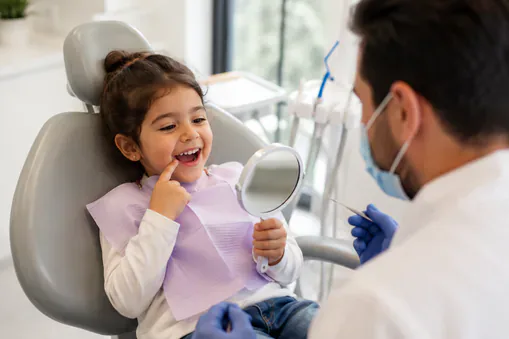
Comprehensive Care for Every Child
In addition to providing preventative and therapeutic dental care, pediatric dentists also offer specialized services for children with special health care needs. These may include children with physical, emotional, developmental, or cognitive disabilities that require additional support during dental visits.
Pediatric dentistry is an essential field of dentistry that focuses on providing comprehensive dental care to children and adolescents. With a focus on prevention, education, and specialized care for children with special health care needs, pediatric dentists play an important role in promoting healthy oral habits and ensuring that children maintain good oral health throughout their lives.
Transcript

What to Expect During a Pediatric Exam and Cleaning
Dental Exam
A pediatric dental exam and cleaning are important steps in maintaining good oral health for children. The exam starts with a review of the child's medical and dental history, as well as any concerns or questions the parent or child may have. The dentist will then examine the teeth, gums, and mouth for any signs of decay, gum disease, or other dental issues.
During the exam, the dentist will also assess the child's bite and jaw development and may take dental x-rays if necessary. Dental x-rays can help identify dental problems that may not be visible during the exam, such as cavities between teeth, and can aid in planning orthodontic treatment if needed.
Dental Cleaning
After the exam, the dentist will perform a pediatric dental cleaning. This involves removing any plaque or tartar buildup on the teeth. They will use special tools to clean and polish the teeth and may also apply a fluoride treatment to strengthen the teeth and prevent tooth decay. The fluoride treatment is usually in the form of a gel or varnish that is applied directly to the teeth and left on for a few minutes.
Oral Hygiene Instructions
During the exam and cleaning, the dentist will also provide education on proper oral hygiene habits, including brushing and flossing techniques, and recommendations for a healthy diet. They may also discuss any concerns or questions that the child or parent may have.
Contact our office today to schedule a pediatric dental exam and cleaning at Woolbert Dental. We look forward to seeing you.
Dental X-Rays in Pediatric Dentistry
Pediatric dentistry relies heavily on x-rays to diagnose and treat various dental conditions in children. Due to their rapidly developing teeth and jaws and higher susceptibility to tooth decay, children require x-rays more frequently than adults. These x-rays enable dentists to identify and treat dental issues that may not be visible during a regular oral examination, such as tooth decay between teeth, impacted teeth, or bone diseases. Early detection of dental problems through x-rays allows for less invasive and more affordable treatment options.
Pediatric dentists are committed to using safe and advanced technology to minimize children's radiation exposure during x-ray examinations. Lead body aprons and shields and modern dental equipment focus the x-ray beam on the required area while filtering out unnecessary x-rays. High-speed film and digital x-rays further minimize radiation exposure. According to the American Academy of Pediatric Dentistry, children with a high risk of tooth decay should undergo x-ray examinations every six months, while children with a low risk of tooth decay may require less frequent x-rays.
Panoramic x-rays are another type of dental x-ray commonly used in pediatric dentistry. These images provide a comprehensive view of the entire mouth, including the upper and lower jaws, teeth, and surrounding structures. Pediatric dentists use panoramic x-rays to assess the development of permanent teeth, detect abnormalities in the jaw, diagnose tumors or cysts, and evaluate the extent of dental trauma. Panoramic x-rays are especially useful for children who have not yet developed all of their permanent teeth, as they provide a comprehensive view of the entire mouth in one image.
Like with other types of dental x-rays, pediatric dentists take great care to ensure that children receive minimal radiation exposure when undergoing a panoramic x-ray. By using safe and advanced technology, pediatric dentists can effectively diagnose dental problems and ensure optimal oral health for children.
Transcript
The Importance of Treating Cavities in Baby Teeth
Cavities on baby teeth may seem like a minor issue, but if left untreated, they can cause a range of serious complications. These complications can include pain, discomfort, and difficulty eating, sleeping, and concentrating in school. Additionally, untreated tooth decay can lead to infections that can spread to other parts of the body, including the gums, jaw, and bloodstream. In severe cases, these infections can even be life-threatening.
One of the most painful complications of untreated cavities is the formation of abscesses, which are pockets of pus that can develop at the base of the tooth. This requires emergency treatment and can be extremely uncomfortable for a child.
If a baby tooth is lost due to untreated cavities, it can also have serious consequences for a child's oral health, including difficulty eating and speaking. Additionally, a child who is unable to eat properly due to tooth pain may not be getting the proper nutrition they need for healthy growth and development.
To prevent these complications, it is important to schedule regular dental check-ups for your child and to address any signs of tooth decay as soon as they arise. By maintaining good oral hygiene habits and seeking prompt treatment for dental problems, you can help ensure your child's oral health and overall well-being.
Types of Pediatric Dental Services
Common pediatric dental services we offer at Woolbert Dental include:
Dental Sealants
A preventive dental treatment that involves applying a thin, plastic coating to the chewing surfaces of the molars and premolars. This coating forms a protective barrier that helps keep out cavity-causing bacteria and food particles. Sealants are recommended for children and teenagers who are at higher risk for developing cavities.
Fillings
Used to restore teeth that have been damaged by decay or trauma. The decayed or damaged portion of the tooth is removed and filled with a tooth-colored composite resin. Your pediatric dentist will take special care to ensure that the fillings are comfortable, durable, and match the color of the surrounding teeth.
Pediatric Root Canal
Performed when the nerve or pulp of a tooth becomes infected or damaged due to decay, trauma, or other factors. The infected portion is removed and filled with a special dental material. Root canals can save a damaged tooth from extraction and help preserve a child's natural smile.
Space Maintainers
Dental devices used to hold space for permanent teeth that have not yet erupted. Typically used after a baby tooth has been lost prematurely due to decay or trauma. The space maintainer prevents surrounding teeth from shifting into the empty space and causing problems with bite and dental alignment.
Tooth Extractions
Sometimes necessary to remove teeth that are damaged, decayed, or causing problems with a child's bite or dental alignment. Pediatric dentists use gentle techniques, and nitrous oxide where it helps, to make sure that extractions are comfortable and stress-free for children.
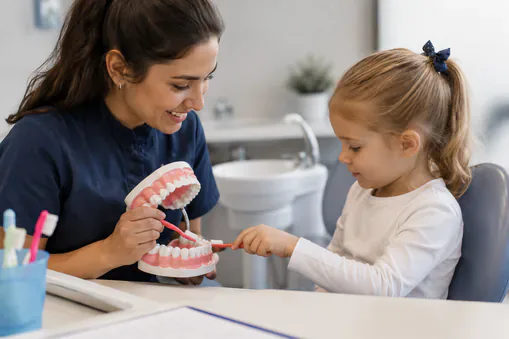
Pediatric Crown Options
Dental crowns are a common treatment for children who have extensive tooth decay, trauma, or other dental issues. There are several types of dental crowns used in pediatric dentistry, each with its own unique benefits:
- Stainless Steel Crowns: The most common type used in pediatric dentistry. They are durable, cost-effective, and can be placed in a single dental visit. Often used for back teeth and can last for several years.
- Strip Crowns: Prefabricated crowns made from a thin layer of tooth-colored material. A good option for children who have mild to moderate tooth decay and need a temporary crown until a permanent restoration can be placed.
- Composite Resin Crowns: Made from a tooth-colored resin material and a good option for children with small to medium-sized cavities. They are less durable than other types and may need to be replaced more frequently.
- Porcelain Crowns: A popular choice for children who have front teeth that are damaged or have undergone significant dental work. Custom-made to match the child's natural tooth color and provide a durable and natural-looking restoration. Learn more about porcelain crowns.
- Zirconia Crowns: A newer type of dental crown made from a strong ceramic material. A good option for children who have metal allergies or sensitivities, and popular for front teeth due to their natural-looking appearance.
If your child is in need of a pediatric dental crown, schedule a consultation today.
Benefits of Pediatric Dental Care
Early dental care sets the foundation for a lifetime of healthy smiles:
Child-Friendly Environment
Our office is designed to make children feel comfortable and safe, with a gentle approach that builds positive associations with dental visits.
Early Detection
Regular pediatric exams catch cavities, alignment issues, and developmental concerns early — when treatment is simpler and less expensive.
Preventive Focus
Sealants, fluoride treatments, and hygiene education help prevent cavities before they start — keeping your child's teeth healthy from the beginning.
Growth Monitoring
Your dentist monitors jaw development, tooth eruption, and bite alignment as your child grows — identifying orthodontic needs early.
Builds Lifelong Habits
Positive early dental experiences and proper hygiene education establish habits that protect your child's oral health for life.
What to Expect at Your Child's First Visit
Your child's first dental visit at Woolbert Dental is designed to be fun, gentle, and stress-free. Here is what happens:
- 1. Welcome and tour. We show your child around the office, introduce them to our team, and let them sit in the chair and explore at their own pace.
- 2. Medical history review. We review your child's health history, medications, and any concerns you have as a parent.
- 3. Gentle exam. Dr. Michael Woolbert counts your child's teeth, checks their gums and bite, and looks for any signs of decay or developmental issues — using age-appropriate language throughout.
- 4. Cleaning (if appropriate). For children who are comfortable, our hygienist performs a gentle cleaning and fluoride application. If your child isn't ready, that's perfectly fine — we'll try again at the next visit.
- 5. Parent consultation. Dr. Michael Woolbert reviews findings with you, discusses any recommended treatment, and answers all your questions about your child's oral development.
Common Concerns About Pediatric Dentistry
Parents often share these concerns with us. Dr. Michael Woolbert addresses each one with care.
"My child is terrified of the dentist"
Dental anxiety in children is very common, and we are trained to work with it — not against it. We use a "tell-show-do" approach, move at your child's pace, and never force treatment. For children with significant anxiety, we offer nitrous oxide ("laughing gas") to help them relax, in a calm and unhurried atmosphere. Many of our most anxious patients end up looking forward to their visits.
"Why treat baby teeth if they're going to fall out anyway?"
Baby teeth hold space for permanent teeth and guide jaw development. A baby tooth lost prematurely to decay can cause neighboring teeth to shift, leading to crowding and alignment problems that may require orthodontic treatment later. Untreated cavities can also cause pain, infection, and difficulty eating — affecting your child's nutrition, sleep, and school performance.
"My toddler sucks their thumb — should I be worried?"
Thumb sucking is normal in infants and toddlers. Most children stop on their own between ages 2 and 4. If the habit continues past age 4 or when permanent teeth begin to erupt, it can affect the alignment of the teeth and the shape of the palate. Dr. Michael Woolbert can assess your child's bite development and recommend gentle strategies to help them stop when the time is right.
Risks of Delaying Pediatric Dental Care
Children's dental problems can escalate quickly without regular professional monitoring.
- Untreated cavities in baby teeth can spread to adjacent teeth and develop into painful abscesses requiring emergency treatment
- Early loss of baby teeth without space maintainers can cause permanent teeth to erupt crooked, increasing the need for orthodontics
- Dental infections in children can spread to the jaw, bloodstream, and surrounding tissues — in rare cases these become life-threatening
- Children who associate dental visits with pain (from emergency treatment of advanced decay) are more likely to develop lifelong dental anxiety
Frequently Asked Questions About Pediatric Dentistry
The American Academy of Pediatric Dentistry recommends that a child's first dental visit should occur when the first tooth erupts or no later than their first birthday. However, many children do well starting around age 3, when they can better participate in the visit.
Dental sealants are a thin coating applied to the chewing surfaces of the back teeth to prevent cavities from forming in the deep grooves and pits. They protect teeth from decay by sealing out bacteria and food particles. Learn more about dental sealants.
Space maintainers are dental devices used to preserve the space created by a lost baby tooth until the permanent tooth is ready to erupt. They prevent other teeth from shifting into the space, which can cause crowding and bite problems.
The American Dental Association (ADA) recommends a dental cleaning every six months. Children with a higher risk of cavities may benefit from more frequent visits.
Yes. At our Shreveport dental office we offer pediatric dentistry to patients in Shreveport and the surrounding area. Contact our office today to schedule an appointment.
Yes. For children with dental anxiety or who need extensive treatment, we offer nitrous oxide ("laughing gas"). It is a safe, mild sedative that helps children relax during the visit. The effects wear off within minutes after the appointment. Dr. Michael Woolbert will discuss whether nitrous oxide is appropriate for your child.
Most dental insurance plans cover preventive care for children, including exams, cleanings, X-rays, sealants, and fluoride treatments. We verify your child's benefits before the appointment and will let you know if any additional services have out-of-pocket costs.
That is completely okay and it happens more often than you might think. We never force a child to accept treatment. If your child is not ready for a full cleaning on the first visit, we may do a simple "tooth count" and chair ride instead — building trust gradually so the next visit goes more smoothly. The goal is always a positive experience, even if that means we accomplish less clinically on the first visit.
Medical Disclaimer
This content is for informational purposes only and does not constitute dental or medical advice, diagnosis, or treatment. Treatment recommendations for children vary based on age, development, and individual health needs. Nitrous oxide carries its own considerations — occasional nausea, and it is unsuitable with a blocked nose or certain medical conditions — and is discussed individually with each family. Consult Dr. Michael Woolbert or a qualified dental professional regarding any questions about your child's oral health. Individual results may vary.
Before, during and after your pediatric dentistry treatment appointment
The exam covers teeth, gums, soft tissues, head and neck, and tracks how the jaws are growing and the teeth are coming through.
How to prepare
- Bring your child's health history so the dentist can determine if there is a need for any special dental care.
- Tell us about oral habits such as thumb sucking — they are assessed as part of the examination.
- Book a morning appointment for a young child if you can. Cooperation drops steeply as the day goes on.
- If your child is anxious, say so when booking. Nitrous oxide and a calm, unhurried appointment are both available.
How it is carried out
- The examination notes the health and condition of the teeth, gums, soft tissues, head and neck.
- The dentist monitors the growth of the jaws and development of the teeth, and evaluates oral habits.
- The teeth are cleaned to remove plaque or calculus and treated with fluoride to strengthen them.
- Sealants of clear plastic are applied to the chewing surfaces to fill the depressions and grooves that are difficult for a child to clean.
- Where restoration is needed, tooth-coloured fillings, stainless steel, NuSmile, strip or Pedo-Jacket crowns are used according to the tooth and the situation.
Afterwards, and long term
- Cleanings and fluoride treatments are recommended twice a year to maintain your child's dental health and prevent decay.
- Sealant application is quick, painless, and can be effective for many years if your child practises good oral hygiene and avoids biting hard objects.
- Where a baby tooth has been lost prematurely, a space maintainer holds the gap open and avoids shifting of the neighbouring teeth.
- If dental problems are identified and treated early, dental care will be less invasive and affordable.
What we use, and why it matters to the result
Children get materials sized and chosen for them: sealants and fluoride to prevent, tooth-coloured or stainless crowns to restore, space maintainers to hold the gap.
Dental sealants
Clear plastic applied to the chewing surface to fill depressions and grooves that are difficult for a child to clean. Quick, painless and effective for many years.
Fluoride
Applied to strengthen the teeth and make them resistant to tooth decay, twice a year alongside cleanings.
Stainless steel crowns
Silver-coloured caps that cover the whole tooth. The most durable option, lasting until the baby tooth falls out around the age of 12.
NuSmile crowns
A stainless steel crown with a tooth-coloured coating on the front, for front baby teeth where appearance matters. Hard foods must be avoided since the coating can chip.
Strip and Pedo-Jacket crowns
The most cosmetically pleasing options. A strip crown leaves only the tooth-coloured material; a Pedo-Jacket leaves the white plastic shell in place.
Space maintainers
Fixed or removable, unilateral or bilateral. They hold open the gap where the permanent tooth will come in. Fixed maintainers are usually recommended for younger patients.